Preload in Precision Bearings: How It Affects Rigidity, Life and Performance
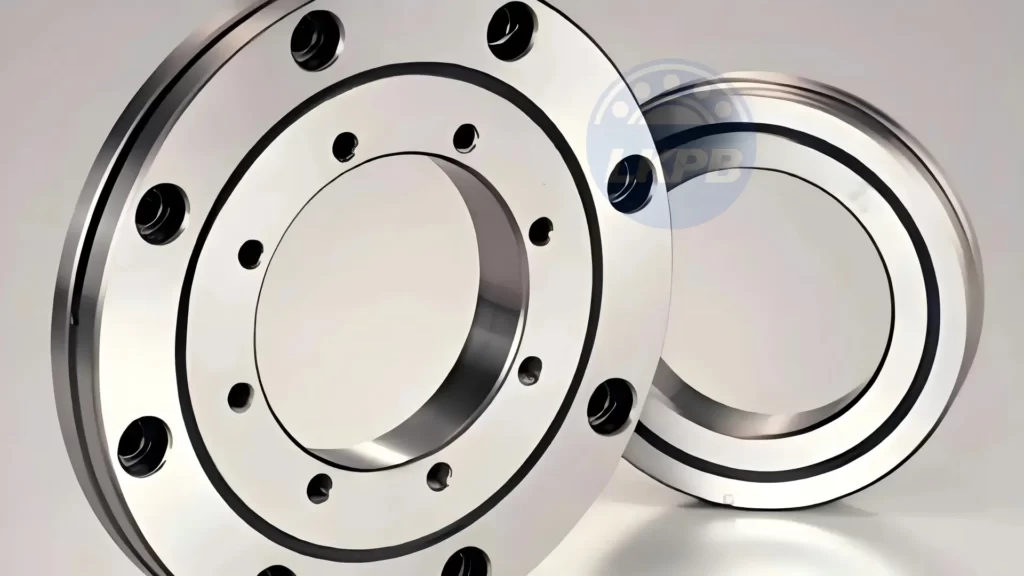
In high-precision machinery, where micron-level accuracy separates success from failure, preload in precision bearings is the unsung hero. Whether you’re designing robotic arms that must repeat movements to within 0.001 mm or CNC rotary tables that demand rock-solid stability under heavy moment loads, understanding preload is non-negotiable. For buyers searching “Preload in Precision Bearings,” the core takeaway from top industry resources is clear: applying the right preload eliminates internal clearance, dramatically boosts system rigidity, optimizes fatigue life, and elevates overall performance—while the wrong choice can shorten service life or generate excessive heat.
At LKPB, a leading Chinese manufacturer of precision cross roller bearings fully interchangeable with IKO, THK, and HIWIN models, we engineer these bearings with exacting preload options tailored for global OEMs and automation integrators. This article dives deep into the mechanics, backed by established engineering principles from SKF, NSK, and precision bearing specialists. You’ll learn exactly how preload influences rigidity, life, and performance, plus practical selection guidance and answers to the questions engineers ask most.
What Is Preload in Precision Bearings?
Preload is a controlled axial (or, in some designs, radial) force applied during assembly that creates a negative internal clearance—essentially compressing the rolling elements and raceways slightly before any external load is applied. In standard bearings, a small positive clearance exists to allow for manufacturing tolerances, thermal expansion, and easy installation. Preload removes that play entirely, forcing elastic deformation so that the inner and outer rings and rolling elements remain in constant, intimate contact.
Think of it as tensioning a guitar string: without it, the string flaps loosely; with the right tension, it delivers precise tone and response. In precision bearings—especially crossed roller bearings (CRBs)—this “negative clearance” ensures every roller shares load immediately, eliminating backlash and micro-movements that destroy accuracy.
Why Preload Matters: The Core Benefits Engineers Demand
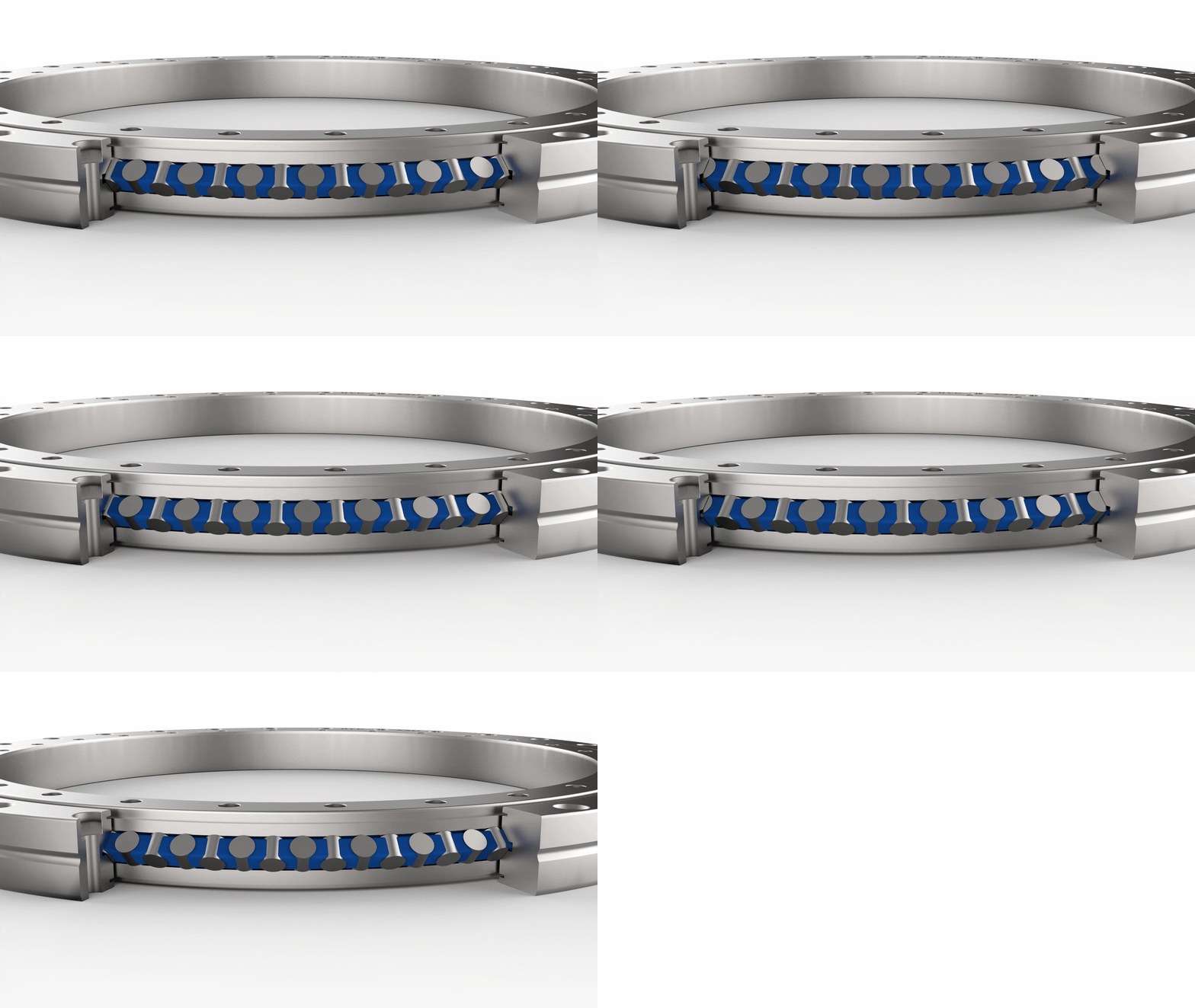
Higher stiffness, extended service life under controlled conditions, and superior dynamic performance. Preload prevents rolling elements from skidding instead of rolling, reduces vibration-induced fretting, and improves load distribution across more elements. In crossed roller bearings, where rollers are arranged at 90° angles to handle combined radial, axial, and moment loads in a single compact unit, preload is particularly powerful for moment rigidity—the resistance to tilting under eccentric forces common in robotics and indexing tables.
Types of Preload and How to Apply Them
Precision bearing designers choose from two fundamental approaches, each suited to different operating regimes.
Solid (Position) Preload
This method uses fixed spacers, shims, or matched bearing pairs with a precise “stand-out” dimension. The inner or outer rings are axially displaced by a calculated amount and locked in place—often with nuts or bolts. Position preload delivers the highest possible rigidity because the displacement is rigid and repeatable. It shines in low-to-moderate speed applications requiring maximum stiffness, such as machine-tool spindles or robotic joints under heavy payload.
The trade-off? Thermal expansion can alter the actual preload. In a back-to-back (DB) arrangement of angular-contact or crossed roller bearings, a temperature rise of just 10 °C can shift preload noticeably. Manufacturers like NSK and THK publish stand-out tables and equations to calculate the exact shim thickness or ring offset needed for a target preload gap (δ_a0).
Spring (Constant-Pressure) Preload
Here, a wave washer, coil spring, or disc spring applies a consistent axial force regardless of minor thermal growth or wear. Spring preload is the go-to for high-speed spindles and applications with wide temperature swings because it self-compensates. It keeps preload stable even as the housing or shaft expands, preventing the bearing from becoming unloaded or over-stressed.
For crossed roller bearings, many catalogs specify spring preload values in newtons or as a percentage of the basic static load rating. The result is smoother high-rpm operation with lower risk of seizure.
Factory Preload Classes: Light, Medium, Heavy
Most precision bearing series (including LKPB’s CRB equivalents to THK RU, RA, and RE series) offer standardized preload classes:
- Light (L or VSP): Minimal negative clearance—ideal for high-speed or light-load robotics where low friction and heat are priorities.
- Medium (M or ZA): Balanced rigidity and life—most common for CNC rotary tables and medical imaging equipment.
- Heavy (H or ZB): Maximum stiffness for heavy-moment or shock-loaded applications, but requires careful thermal analysis.
LKPB’s precision cross roller bearings ship with these classes pre-set and verified on automated gauging stations, ensuring drop-in interchangeability with IKO, THK, and HIWIN without re-adjustment.
How Preload Dramatically Increases Rigidity
Rigidity—defined as applied force divided by elastic deformation (k = F/δ)—is the metric that matters most in precision positioning. Without preload, only a few rolling elements carry load at any instant; the rest float in clearance. Preload brings more (often all) elements into simultaneous contact, so stiffness can rise 2× to 4× depending on bearing type and preload level.
In crossed roller bearings, the crossed 90° roller arrangement already provides excellent moment stiffness. Adding preload further linearizes the load-deflection curve: displacement under load becomes roughly half that of a non-preloaded unit. Engineers measure this in μm/kN. For example, a typical RA-series CRB with light preload m
ight show radial stiffness of 150–250 kN/mm; medium preload pushes it to 300+ kN/mm—critical when your robot arm must hold position while welding or assembling under vibration.
Finite-element analysis (FEA) and Hertzian contact theory confirm that preload reduces contact stress concentrations and damps micro-vibrations. The result? Repeatability improves from ±5 μm to ±1 μm or better in real-world robotic joints.
The Direct Link Between Preload and Bearing Life
Bearing life follows the Lundberg-Palmgren theory: basic rating life L₁₀ = (C / P)^(10/3) for roller bearings, where C is dynamic load rating and P is equivalent dynamic load. Preload modifies P slightly because it adds an internal load component (F₀).
Proper preload actually extends life by:
- Distributing external loads across more rollers, lowering peak contact stress.
- Preventing skidding that causes surface fatigue.
- Reducing vibration-induced fretting.
Industry guidelines (THK, NSK) recommend that the preload-induced internal load should not exceed roughly 10–20 % of the applied load so that overall life remains above 50 % of the catalog rating. Excessive preload inflates P, generates heat, and shortens life dramatically—sometimes halving it.
In practice, LKPB’s crossed roller bearings with optimized medium preload routinely achieve 1.5–2× longer service intervals in customer robotics tests compared to zero-clearance or over-preloaded competitors.
Performance Gains: Accuracy, Noise, Speed, and Heat
Rotational Accuracy and Runout Preload locks the shaft axially and radially, slashing non-repetitive runout (NRRO). In precision crossed roller bearings, this can reduce radial runout from 5 μm to under 1 μm—exactly what coordinate-measuring machines and semiconductor handlers require.Product.minebeamitsumi
Vibration and Noise Reduction Constant contact eliminates the “rattle” of loose elements. Noise drops by 3–6 dB; vibration amplitude can fall 50 % or more, protecting sensitive electronics in medical scanners or inspection systems.
High-Speed Operation Spring preload is king here. It maintains stable axial force while allowing the bearing to “breathe” thermally, keeping operating temperatures 10–20 °C lower than solid preload at 3000 rpm.
Heat Management The sweet spot is light-to-medium preload. Beyond that, frictional torque rises sharply, and grease life plummets. LKPB’s low-friction roller designs, combined with optimized preload, keep temperature rise below 30 °C even in continuous-duty rotary tables.
Selecting the Right Preload for Your Cross Roller Bearing Application
Follow this step-by-step process used by global OEMs:
- Define operating conditions — radial/axial/moment loads, speed (rpm), duty cycle, temperature range, required stiffness (μm deflection limit), and positioning accuracy.
- Calculate equivalent load — include preload force F₀ in the vector sum.
- Check manufacturer stiffness curves — LKPB and major brands publish graphs showing rigidity vs. preload class.
- Apply FEA or catalog life calculator — verify L₁₀ > target hours and temperature rise < 40 °C.
- Prototype and measure — use torque gauges and displacement sensors during run-in.
For robotics: Light preload (VSP) is standard for harmonic-drive joints needing high speed and low torque ripple. For CNC rotary tables: Medium preload balances rigidity and life under indexing loads. For medical gantries: Micro or light preload minimizes starting torque and vibration.
Common Questions Engineers Ask About Preload—and the Answers
Q: How do I know if my current bearings need preload?
A: Measure axial play with a dial indicator under light load. If > 5–10 μm in a crossed roller bearing, preload will improve accuracy and life. Excessive starting torque or audible “clicking” under reversal also signals insufficient preload.
Q: Can I adjust preload in the field?
A: Only if the design uses adjustable shims or nuts. Most precision CRBs are factory-preloaded; attempting adjustment risks contamination or damage. Specify the correct class at ordering.
Q: Does higher preload always mean longer life?
A: No. Optimal is application-specific. Use manufacturer life-adjustment factors that account for preload-induced internal load.
Q: How does temperature affect preload?
A: Solid preload can increase 20–30 % with a 20 °C rise; spring preload stays nearly constant. Always factor housing and shaft materials (aluminum expands more than steel).
Q: What’s the difference between preload in ball vs. roller bearings?
A: Roller bearings (especially crossed) develop higher stiffness per unit preload because of line contact. Ball bearings rely on point contact and are more sensitive to overload.
Q: How do I verify preload after installation?
A: Measure breakaway torque or axial displacement under known force. LKPB provides acceptance criteria and test reports with every shipment.
Why LKPB Precision Cross Roller Bearings Deliver Superior Preload Performance
Engineered in ISO 9001-certified facilities and 100 % inspected for preload accuracy, LKPB’s CRB series (RA, RB, RE, RU, SX equivalents) match or exceed IKO, THK, and HIWIN specifications in rigidity, life, and interchangeability. We offer custom preload tuning for OEM volumes—light, medium, or application-specific force—plus rapid prototyping and full technical support from our San Jose-area sales team.
Ready to Optimize Your Next Design? OEM and Custom Manufacturing Call to Action
If you’re specifying precision cross roller bearings for robotics, CNC, medical devices, or rotary tables, don’t leave preload to chance. LKPB’s engineers provide free application reviews, stiffness calculations, and life predictions within 24 hours. Whether you need standard drop-in replacements or fully customized preload, bore, and mounting configurations, we deliver competitive lead times and global shipping from our China manufacturing base.
Contact our team today for a no-obligation preload optimization consultation and discover why OEMs worldwide trust LKPB for precision performance that lasts.
Article Keywords Preload in Precision Bearings, bearing preload, crossed roller bearing preload, precision cross roller bearings, bearing rigidity, bearing life calculation, preload stiffness, solid preload vs spring preload, cross roller bearing selection, preload for robotics, CNC rotary table bearings, IKO THK HIWIN equivalent bearings, bearing preload effects, high precision bearings preload, moment rigidity preload.
For expert guidance in meeting your specific requirements, reach out to our knowledgeable team. Experience firsthand how our precision solutions can elevate your machinery’s efficiency and durability. Contact us today!
LKPB With more than 10 years of production experience
Supporting OEM service; 50 days return service; 7*24 hours technical support; Accept non-standard customization; Maximum 24 months product warranty
LKPB®
Get a free quote fast
Please let us know the product model and quantity you need and we will provide the most competitive quote! Alternatively, you can contact our knowledgeable customer service team
Email: [email protected] WhatsApp/Wechat: +86 13613886217