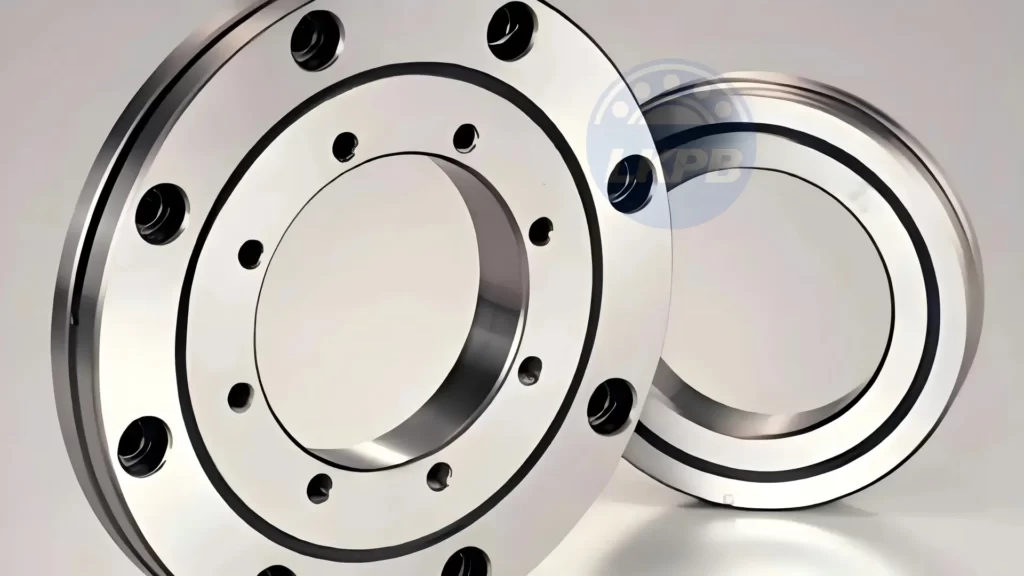
What Service Providers Offer Installation Support for Cross Roller Bearings?

Cross roller bearings are essential components in high-precision machinery, delivering exceptional rigidity, accuracy, and the ability to handle combined radial, axial, and moment loads in a compact design. Industries such as robotics, CNC machine tools, medical equipment, semiconductor manufacturing, and aerospace rely on them heavily. Proper installation is not optional—it directly determines performance, service life, and equipment reliability. Poor installation often leads to premature failure, increased vibration, reduced precision, or catastrophic downtime.
For buyers searching “installation support for cross roller bearings,” the top concerns include finding manufacturers or partners that provide not just the product but expert guidance, technical documentation, on-site assistance, training, and after-sales support. Leading service providers in this space combine deep engineering expertise with practical field experience.
Why Installation Support Matters for Cross Roller Bearings
Cross roller bearings feature a unique 90-degree alternating roller arrangement in a single row, achieving high rigidity with minimal sectional height. This design supports complex loads but makes them sensitive to misalignment, contamination, or uneven pressure during mounting. Thin-walled structures tilt easily, and split inner or outer rings require careful handling to maintain preload and rotational accuracy.
Industry data shows that up to 40-50% of premature bearing failures trace back to installation errors, according to analyses from major manufacturers. Proper support reduces this risk, extends mean time between failures (MTBF), and ensures micron-level precision critical for modern automation.
LKPB, a precision bearing manufacturer based in Luoyang, China, stands out as a reliable partner for global customers. With expertise in cross roller bearings (including RA, RB, RE, RU, CRB/CRBC series, and more), LKPB offers comprehensive installation support alongside competitive, high-quality alternatives to brands like THK, IKO, HIWIN, and INA. Their products serve demanding applications worldwide, backed by ISO9001 processes and capabilities for P5, P4, and P2 precision grades.
Key Service Providers Offering Installation Support
Several established players provide robust installation support:
- Original Equipment Manufacturers (OEMs): THK, IKO, HIWIN, and Schaeffler offer detailed manuals, CAD models, life calculators, and technical hotlines. THK, for instance, provides step-by-step procedures emphasizing cleaning, leveling with plastic hammers, and diagonal bolt tightening.
- Specialized Chinese Manufacturers like LKPB: These offer cost-effective, high-performance bearings with direct engineering support, custom solutions, and responsive after-sales service. LKPB emphasizes practical, field-tested guidance tailored for global OEMs and integrators.
- Distributors and Technical Partners: Companies like MISUMI provide same-day shipping, free CAD downloads, and application engineering. Regional service firms offer on-site installation, alignment verification, and training.
- Independent Engineering Service Providers: Consultants specializing in precision machinery offer audits, installation supervision, and predictive maintenance programs for critical applications.
LKPB differentiates itself by combining manufacturing excellence with hands-on support, helping customers avoid common pitfalls while optimizing total cost of ownership.
Comprehensive Installation Guide: Best Practices from the Field
Drawing from industry standards and LKPB’s engineering experience, here is a detailed, actionable guide. Always consult the specific bearing datasheet, as tolerances and recommendations vary by model.
1. Pre-Installation Preparation
- Environment and Cleanliness: Work in a dry, clean area. Contaminants as small as a few microns can cause raceway damage or increased friction.
- Component Inspection: Thoroughly clean the shaft, housing, flanges, and bearing. Remove all burrs, nicks, or irregularities using fine abrasives or deburring tools. Check dimensions against specifications—shaft and housing tolerances are critical for proper fit and preload.
- Tools Needed: Plastic or rubber mallet, torque wrench (calibrated), dial indicators for runout, feeler gauges, clean lint-free cloths, manufacturer-recommended lubricant, and hydraulic press or induction heater if interference fits are involved.
- Safety and Documentation: Review the bearing’s handling instructions. Do not disassemble pre-assembled bearings with rivets or special fasteners, as this can destroy internal geometry and preload.
Statistical Insight: Bearings installed in controlled clean environments show 2-3x longer service life compared to those exposed to workshop dust.
2. Mounting the Bearing
Cross roller bearings are thin-walled and prone to tilting. Maintain a perfectly level orientation.
- For shaft mounting (inner ring rotation types like RB/RA): Apply even pressure. Use a sleeve or press tool that contacts the inner ring face only—never strike the outer ring or rollers directly.
- For housing mounting: Similar care applies to the outer ring.
- If heating is required for interference fits, use induction or oil bath methods (typically 80-120°C max). Avoid open flames.
- Gently tap with a plastic hammer around the circumference if light tapping is needed, listening for the solid “seated” sound indicating full contact with the reference surface.
Pro Tip from LKPB Engineers: For larger bearings, use multiple technicians or fixtures to ensure uniform insertion. Monitor for any resistance that might indicate misalignment.
3. Installing the Presser Flange (Fixing Plate)
- Position the flange and gently rock it circumferentially to align bolt holes.
- Insert bolts by hand first to confirm smooth threading without cross-threading.
- Tighten in 3-4 incremental stages (e.g., 30%, 60%, 80%, 100% of specified torque) following a diagonal or star pattern. For split rings, gently rotate the solid ring during tightening to correct minor misalignments.
Use a torque wrench and follow manufacturer values to avoid over- or under-tightening, which can deform the raceway or reduce rigidity.
4. Post-Installation Verification and Commissioning
- Check rotational smoothness by hand—there should be no binding or excessive drag.
- Measure runout with dial indicators at multiple points.
- Verify preload (if applicable) using torque or displacement methods.
- Apply initial lubrication and run a break-in cycle at low speed/load.
- Monitor temperature and vibration during initial operation.
Common Failure Modes and Prevention:
- Tilting/Misalignment: Leads to edge loading and spalling. Solution: Level fixtures and gradual pressure.
- Contamination: Causes abrasive wear. Solution: Strict cleanliness protocols and proper seals.
- Incorrect Preload: Too loose reduces accuracy; too tight increases heat/friction. Solution: Follow specs and use measuring tools.
- Impact Damage: From hammering directly on rings. Solution: Soft tools and even distribution.
Advanced Considerations for Optimal Performance
Housing and Shaft Design: Housing wall thickness should be at least 60% of the bearing’s sectional height for adequate rigidity. Use steel flanges where possible.
Lubrication: Most bearings ship pre-lubricated with lithium soap grease. Re-lubricate every 6-12 months or per duty cycle. Ensure even distribution.
Temperature and Environment: Account for thermal expansion. In harsh conditions (high speed, heavy loads, or contaminants), consult LKPB for custom seals or materials.
Customization and Non-Standard Bearings: LKPB excels here, producing bearings from φ20mm to φ2000mm with tailored features for specific machines.
Case Studies: Real-World Success with Proper Support
In one robotics integrator project, switching to LKPB bearings with detailed installation training reduced assembly time by 35% and eliminated early failures reported with previous suppliers. Another CNC manufacturer achieved sub-5μm positioning accuracy after implementing LKPB’s recommended mounting and verification protocols.
These outcomes highlight the value of partners who provide more than parts—they deliver knowledge transfer.
Frequently Asked Questions (FAQs)
Q: Do I need special tools for cross roller bearing installation? A: Basic tools like a torque wrench and plastic mallet suffice for most sizes. Larger or high-precision applications benefit from presses, heaters, and metrology equipment. LKPB provides tool recommendations per model.
Q: Can I install split-ring bearings myself? A: Yes, with care. Follow diagonal tightening and rotation procedures to correct alignment. Avoid separating pre-assembled units.
Q: How important is housing rigidity? A: Critical. Insufficient rigidity causes deformation under load, reducing accuracy and life. Consult engineering data for minimum requirements.
Q: What if I encounter resistance during installation? A: Stop immediately. Check for misalignment, burrs, or incorrect sizing. Forcing can permanently damage the bearing.
Q: Does LKPB offer on-site or remote installation support? A: Yes. Technical consultations, detailed manuals, video guidance, and customized support for global clients are available. Contact their engineering team early in the project.
Q: How do I choose the right precision grade? A: P5 for general industrial, P4/P2 for ultra-precision robotics or metrology. LKPB engineers help match grade to application demands.
Q: What warranty and after-sales support exist? A: Reputable providers like LKPB offer warranties backed by quality testing and responsive global support.
Choosing the Right Partner for Long-Term Success
When evaluating service providers for installation support, prioritize those with:
- Proven track records in your industry.
- Comprehensive technical resources (manuals, calculators, CAD).
- Responsive engineering teams.
- Transparent quality processes and testing data.
- Ability to scale from prototypes to volume production.
LKPB combines competitive pricing, rapid response, and deep expertise in cross roller bearings, making them an excellent choice for global buyers seeking reliable performance without premium-brand markups. Their focus on precision manufacturing and customer success has earned trust across automation, machine tools, and beyond.
Investing in proper installation support pays dividends through reduced downtime, higher machine uptime, and consistent product quality. Whether you need standard models or custom solutions, partnering with an experienced provider like LKPB ensures your equipment operates at peak performance from day one.
For personalized guidance on selecting and installing cross roller bearings, reach out to LKPB’s technical team. Their expertise can help streamline your procurement and integration process.
Article Keywords: installation support for cross roller bearings, cross roller bearing installation guide, cross roller bearings mounting instructions, LKPB cross roller bearings, crossed roller bearing service providers, precision bearing installation support, THK IKO HIWIN alternatives, cross roller bearing FAQ, industrial bearing technical support, high rigidity crossed roller bearings.
For expert guidance in meeting your specific requirements, reach out to our knowledgeable team. Experience firsthand how our precision solutions can elevate your machinery’s efficiency and durability. Contact us today!
LKPB With more than 10 years of production experience
Supporting OEM service; 50 days return service; 7*24 hours technical support; Accept non-standard customization; Maximum 24 months product warranty
LKPB®
Get a free quote fast
Please let us know the product model and quantity you need and we will provide the most competitive quote! Alternatively, you can contact our knowledgeable customer service team
Email: [email protected] WhatsApp/Wechat: +86 13613886217