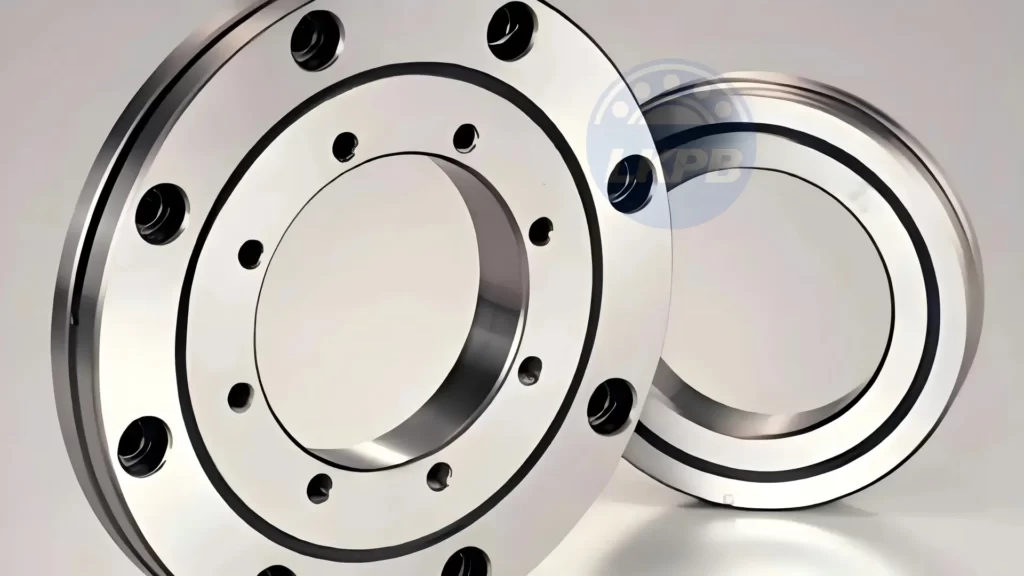
When searching for select cross roller bearing, engineers, procurement specialists, and OEM designers typically seek high-precision components that deliver exceptional rigidity, accuracy, and multi-directional load capacity in compact spaces. These bearings stand out in applications requiring smooth, backlash-free motion with minimal deflection, such as robotics, machine tools, medical equipment, and semiconductor manufacturing.
Key considerations when selecting include load ratings (radial, axial, and moment), rotational accuracy (often P4 or better), rigidity, mounting configuration (split inner or outer ring), preload options, and compatibility with existing designs from brands like THK, IKO, or HIWIN. Buyers also prioritize reliable suppliers offering competitive pricing, fast lead times, and customization for unique requirements.
LKPB, a precision bearing manufacturer based in China, specializes in Precision Cross Roller Bearings engineered to match or exceed the performance of leading global brands while providing significant cost advantages and flexible OEM solutions.
What Are Cross Roller Bearings?
Cross roller bearings (also called crossed roller bearings or cross-roller rings) feature cylindrical rollers arranged at 90-degree angles to each other between the inner and outer rings. The rollers run in a V-shaped groove, with each roller perpendicular to its neighbor and separated by spacers. This “X” or crossed configuration allows a single bearing to support combined loads—radial, axial (in both directions), and tilting moment—simultaneously with high stiffness and precision.
Unlike traditional ball bearings or tapered roller bearings, the crossed design maximizes contact area, minimizes elastic deformation, and provides superior rigidity in a thin-section profile. The result is exceptional rotational accuracy, low friction torque, and the ability to replace multiple bearings in space-constrained assemblies.
These bearings come in various series, including slim-type (thin-section), high-rigidity, and mounting-hole types, with inner diameters ranging from 20mm to over 2000mm in precision manufacturing. Common accuracy classes include P5, P4, and P2, with options for preload to further enhance stiffness and eliminate clearance.
Key Advantages of Selecting Cross Roller Bearings
When you select cross roller bearing solutions, several performance benefits drive their popularity in high-precision industries:
- High Rigidity and Load Capacity: The crossed roller arrangement distributes loads evenly across a large contact area, offering up to several times the rigidity of ball bearings. They handle complex multi-directional loads without significant deflection, making them ideal for applications with tilting moments or combined forces.
- Compact Design and Space Savings: Their thin-section profile allows one bearing to perform the work of two or more conventional bearings, reducing overall assembly size, weight, and material costs.
- Superior Rotational Accuracy and Smooth Motion: Low friction and precise roller guidance deliver excellent running accuracy with minimal vibration. This is critical for positioning tasks where even micron-level deviations matter.
- Simplified Installation: Many designs feature a split inner or outer ring, enabling easy mounting and adjustment. Once installed and bolted, they achieve optimal preload or clearance with minimal effort.
- Long Service Life and Durability: With proper lubrication and sealing, these bearings resist wear under demanding conditions, including high-speed rotation, cleanroom environments, or vacuum applications.
- Versatility Across Industries: From robotic joints and CNC rotary tables to medical imaging gantries and optical instruments, cross roller bearings excel where precision, compactness, and reliability converge.
Compared to ball bearings, cross roller bearings offer better moment load support and higher stiffness. Versus crossed roller slides for linear motion, the rotary versions prioritize rotational precision over long-stroke travel.
How to Select the Right Cross Roller Bearing: A Step-by-Step Guide
Selecting the optimal cross roller bearing requires a systematic approach based on your application’s specific demands. Here’s a practical framework used by engineers worldwide:
1. Define Application Requirements
Start by analyzing operating conditions:
- Load Profile: Calculate radial, axial, and moment loads. Include dynamic and static equivalents, plus safety factors for shock or vibration.
- Speed and Duty Cycle: Determine maximum rotational speed (consider limiting dmN values) and whether operation is continuous or intermittent.
- Precision Needs: Specify required rotational accuracy, positioning repeatability, and allowable runout. Higher precision classes (P4/P2) suit metrology or semiconductor equipment.
- Environment: Factor in temperature range, contamination (dust, coolant), vacuum/cleanroom needs, or corrosion exposure to choose appropriate seals and materials.
- Mounting Space: Measure available envelope for inner/outer diameter and height. Consider shaft/housing fits and rigidity of surrounding structures.
2. Choose Bearing Type and Series
Popular configurations include:
- RB Series (integral inner ring, split outer ring): Excellent for high inner-ring rotation accuracy.
- RA/RAU Series (split outer ring, rotating inner ring): Slim and lightweight, ideal for space-limited designs.
- RU Series (integrated inner/outer rings with mounting holes): Simplifies installation without separate flanges.
- SX/XSU Series (high-rigidity or slim types): For ultra-precision or large-diameter applications.
Evaluate split vs. integrated rings based on ease of assembly and required stiffness.
3. Determine Size and Capacity
Use manufacturer catalogs or calculation tools to match basic dynamic and static load ratings. Ensure the bearing’s rated life (L10) exceeds your application’s expected hours. Account for preload: light preload increases rigidity but may raise torque; zero or negative clearance suits ultra-precise needs.
4. Specify Accuracy, Clearance, and Preload
Select tolerance class (P5 standard, P4/P2 for higher precision). Preload options enhance rigidity and eliminate play but require careful torque control during installation.
5. Consider Lubrication and Sealing
Grease is common for most applications; oil suits high-speed needs. Effective seals prevent ingress of contaminants while retaining lubricant.
6. Verify Rigidity and Deflection
Cross roller bearings excel here, but confirm housing and shaft rigidity to avoid compromising overall system performance.
7. Evaluate Cost, Lead Time, and Supplier Reliability
Beyond performance, assess total cost of ownership, including availability of equivalents to THK, IKO, or HIWIN models.
Pro Tip: For borderline applications, consult with the manufacturer for finite element analysis (FEA) or application engineering support to optimize selection.
Understanding Cross Roller Bearing Types and Series
Manufacturers offer standardized series compatible with global designs. For example:
- THK-style RB/RB series emphasize inner-ring precision.
- IKO-style options focus on compactness.
- HIWIN and INA/Schaeffler SX series provide robust high-rigidity solutions.
LKPB produces full interchangeability with these brands across RA, RB, RU, CRBH, SX, and custom variants, with inner diameters from φ20mm to φ2000mm and accuracy grades down to P2. This ensures drop-in replacement without redesign.
Common Applications of Precision Cross Roller Bearings
These bearings power precision motion in:
- Industrial Robotics: Joints and arms requiring high torque stiffness and repeatability.
- Machine Tools: Rotary tables, indexing heads, and spindles for CNC accuracy.
- Medical Equipment: CT/MRI gantries, surgical robots, and diagnostic instruments.
- Semiconductor and Electronics Manufacturing: Wafer handling, inspection stages, and cleanroom automation.
- Aerospace and Optics: Telescopes, satellite mechanisms, and alignment systems.
- Automation and Material Handling: Where compact, high-rigidity rotation is essential.
In each case, the ability to handle moment loads in a single compact unit reduces parts count and improves dynamic performance.
Factors to Consider When Selecting Cross Roller Bearings for Your Project
Beyond basics, pay attention to:
- Housing and Shaft Fit: Interference or transition fits to maintain rigidity.
- Thermal Expansion: Matching coefficients or allowing for temperature variations.
- Lubrication Regime: Avoiding starvation or over-lubrication that increases torque.
- Mounting Procedure: Torque sequences for split-ring designs to achieve even preload.
- Life Calculation: Using ISO 281 standards adjusted for application factors.
For robotics, emphasize preload and low torque; for machine tools, prioritize runout and stiffness.
Troubleshooting Common Issues with Cross Roller Bearings
Even high-quality bearings can face challenges. Here are frequent problems and solutions:
Excessive Noise or Vibration:
- Causes: Misalignment, insufficient preload, contamination, or damaged rollers.
- Solutions: Check installation alignment with dial gauges, ensure proper preload, and verify clean lubrication. Replace seals if contaminated.
Premature Wear or Reduced Life:
- Causes: Overloading, inadequate lubrication, or improper fits leading to creep.
- Solutions: Recalculate loads with safety margins, implement scheduled relubrication, and use correct shaft/housing tolerances.
Increased Torque or Sticking:
- Causes: Excessive preload, binding from thermal effects, or debris.
- Solutions: Adjust preload, incorporate temperature compensation, and improve sealing.
Positioning Errors or Backlash:
- Causes: Housing deflection, loose mounting bolts, or wear.
- Solutions: Reinforce mounting structures, retorque fasteners, and monitor for early signs of wear.
Seal Failure:
- Causes: Aggressive environments or high speeds.
- Solutions: Upgrade to labyrinth or contact seals suited to conditions, or consult for custom sealing.
Regular maintenance—inspection, relubrication, and vibration monitoring—extends service life significantly. For persistent issues, work with your supplier for root-cause analysis.
Why Choose LKPB Precision Cross Roller Bearings?
As a specialized Chinese manufacturer, LKPB focuses exclusively on high-precision cross roller bearings. Our products are manufactured under strict quality controls using advanced grinding and assembly techniques to achieve dimensional accuracy and surface finishes comparable to top-tier brands.
Key Benefits of Partnering with LKPB:
- Direct Performance Equivalence: Models designed as perfect drop-in replacements for IKO, THK, HIWIN, INA, and others, with matching dimensions, load ratings, and accuracy.
- Cost-Effective Solutions: Significant savings without compromising quality, ideal for OEM volume production or cost-sensitive projects.
- Customization Expertise: Tailored designs for non-standard sizes, special materials, higher precision, or unique mounting features. Our engineering team supports OEM/ODM projects from concept to mass production.
- Broad Size Range: φ20mm to φ2000mm, covering slim to large-diameter needs.
- Reliable Supply Chain: Stable production capacity and competitive lead times for global customers.
- Technical Support: Application engineering, selection assistance, and testing data to ensure optimal integration.
Clients in machine tools, robotics, and automation have successfully standardized on LKPB bearings, achieving equivalent performance at lower total cost.



 English
  French
 German
 Italian
 Spanish
 Korean
 Russian